
For Asian restaurants
Kitchen software for Asian restaurants.
Chinese, Thai, Japanese, Korean and Vietnamese kitchens cook fast and prep deep: sauces by the gallon, rice all day, sushi rice that has to stay acidic, and a menu full of soy, sesame, shellfish and peanuts. Zatila puts the wok station's steps, the rice checks and the allergen chart on one tablet, and sets up everything for you from your menu and recipe files.
30-day free trialNo card neededUnlimited tablets
What does kitchen software do for an Asian restaurant?
Asian restaurant kitchen software keeps sauces and rice consistent and safe, and makes allergen questions easy to answer. Zatila gives the wok station a step-by-step guide for each dish and scales sauce batches with a batch scaler. It times rice cooling and asks for the temperature at each stage, and logs sushi rice pH readings with a corrective action when one is out of range. Soy, sesame, shellfish and peanuts show on an allergen chart across the whole menu.
- Wok guides
- Oil, aromatics, protein, sauce and garnish, in order
- Sauce batches
- Half a batch to 4 batches, every amount worked out
- Rice
- Cooling timers, hot holding checks and sushi rice pH
- Allergens
- Soy, sesame, shellfish, fish and peanuts, dish by dish
The problem
What makes an Asian kitchen hard to run
The cooking takes ninety seconds. The prep behind it takes all morning, and most of it is sauce and rice.
The wok is faster than a recipe card
A stir-fry is done before anyone could read a laminated sheet. The order of aromatics, sauce and garnish lives in one cook's hands, and leaves with them.
The sauces are the menu
General Tso's, pad Thai, teriyaki, nuoc cham and gochujang glaze are made in big batches. Get the math wrong at 3 batches, and every dish that night tastes off.
Cooked rice is a known risk
Rice cooled slowly or held warm lets Bacillus cereus grow, and reheating doesn't destroy the toxin it makes. Cooling has to be timed and checked, not guessed.
Sushi rice lives on its pH
Sushi rice kept at room temperature is safe because the vinegar keeps it acidic. Many health departments want a pH reading recorded for every batch.
Allergens hide in the sauce
Soy in nearly everything, sesame oil, fish sauce, oyster sauce, peanuts in satay. A server asking "is there peanut in this?" needs a sure answer, not a guess from the pass.
Many stations, one prep list
Wok, fryer, noodles, dumplings and the sushi bar each prep different things. One long list hides what each station is short on.
How Zatila handles it
How Zatila runs an Asian kitchen
Guides at the wok, sauces by the batch, and every rice check on the record.
Wok and noodle stations
Each dish, in the order it hits the wok.
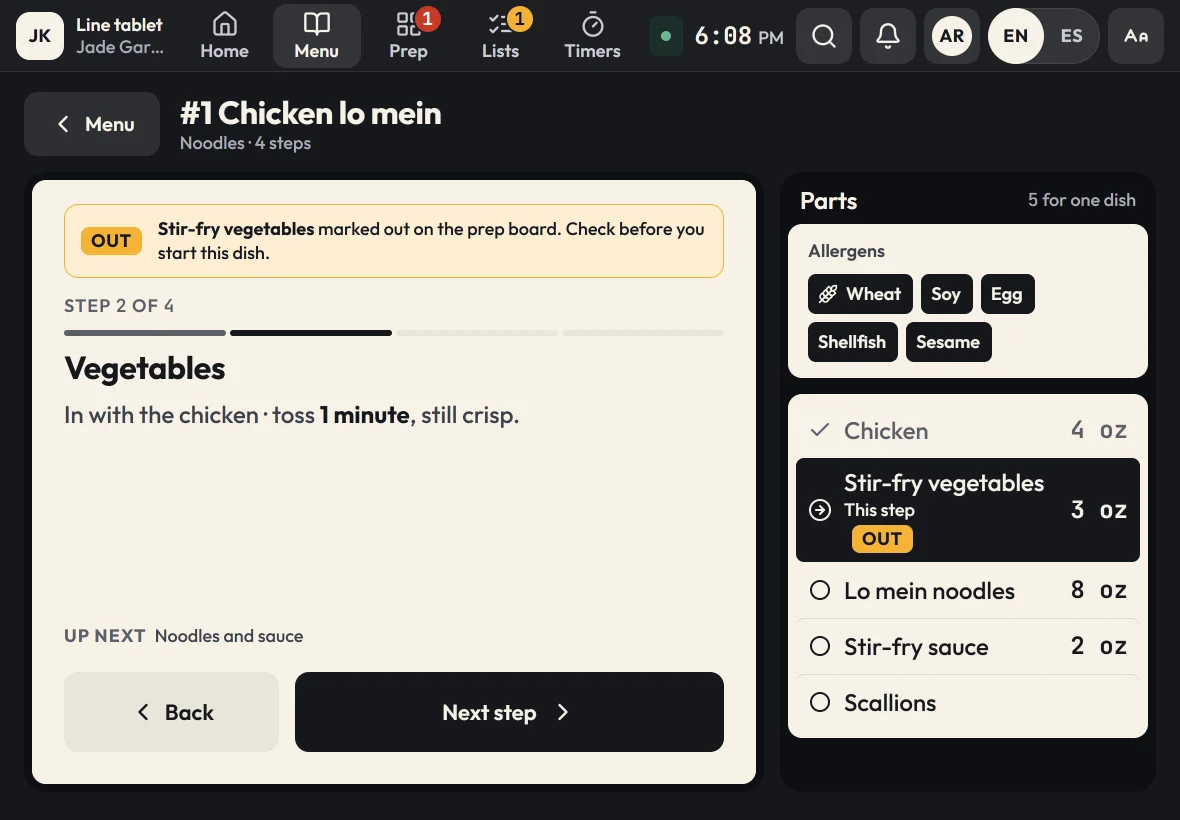
Every dish is a guide with one step per screen in big type: oil and aromatics, protein, vegetables, sauce, then garnish, with the amount for each part, like 2 oz of sauce or 1 tbsp of scallions. Add a photo of the finished plate to the last step. Lo mein, fried rice and pad see ew come out the same for the opener and the closer.
- Allergens at the top of every guide
- Sizes, like a lunch and a dinner portion, with each part's amount in each
- Flashcards and a quiz from your own menu for new cooks
Sauces and stocks
Mother sauces, scaled to the day.
Each sauce, stock and marinade is a recipe with its ingredients to tick off, its shelf life and where to keep it. The batch scaler goes from half a batch to 4 batches and works out every amount, so a cook making 3 batches of stir-fry sauce for Friday never multiplies soy sauce and cornstarch in their head. When it's made, a use-by label prints in two taps.
More on recipe guides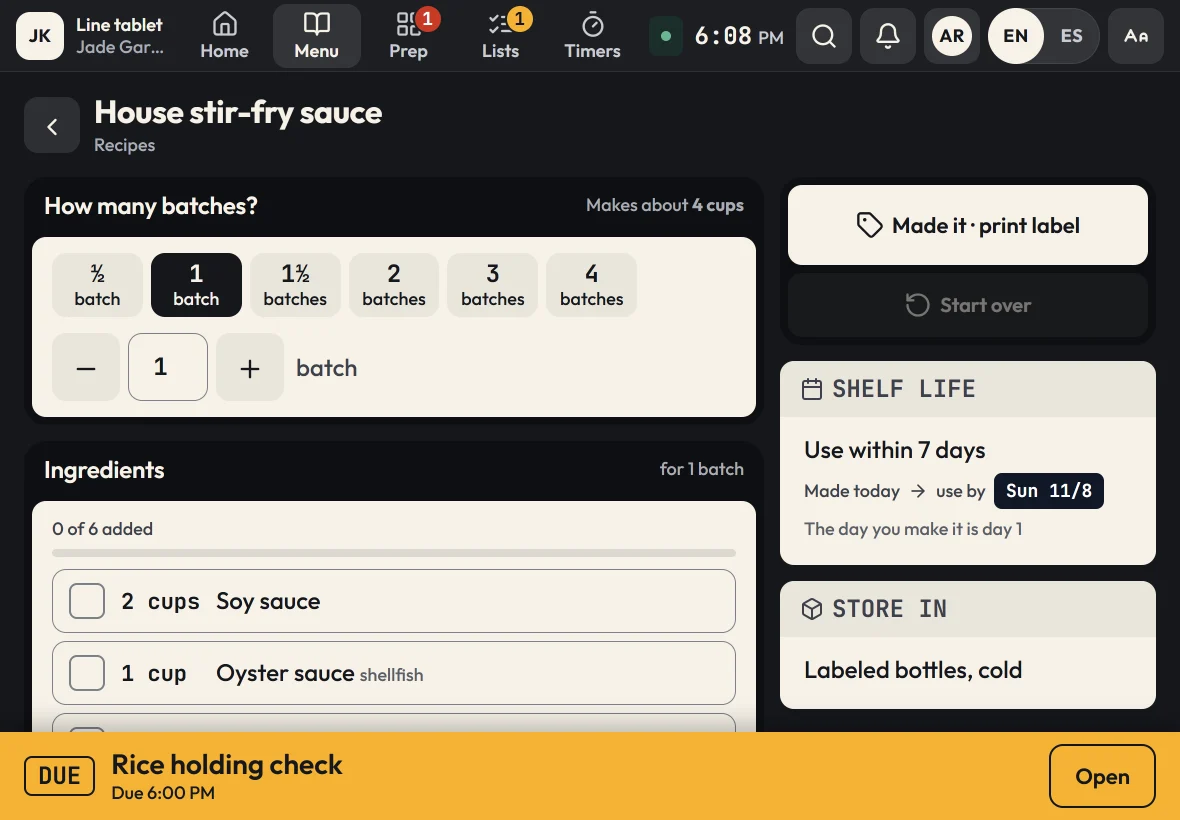
Rice and sushi rice
Rice cooling, holding and pH, on the record.
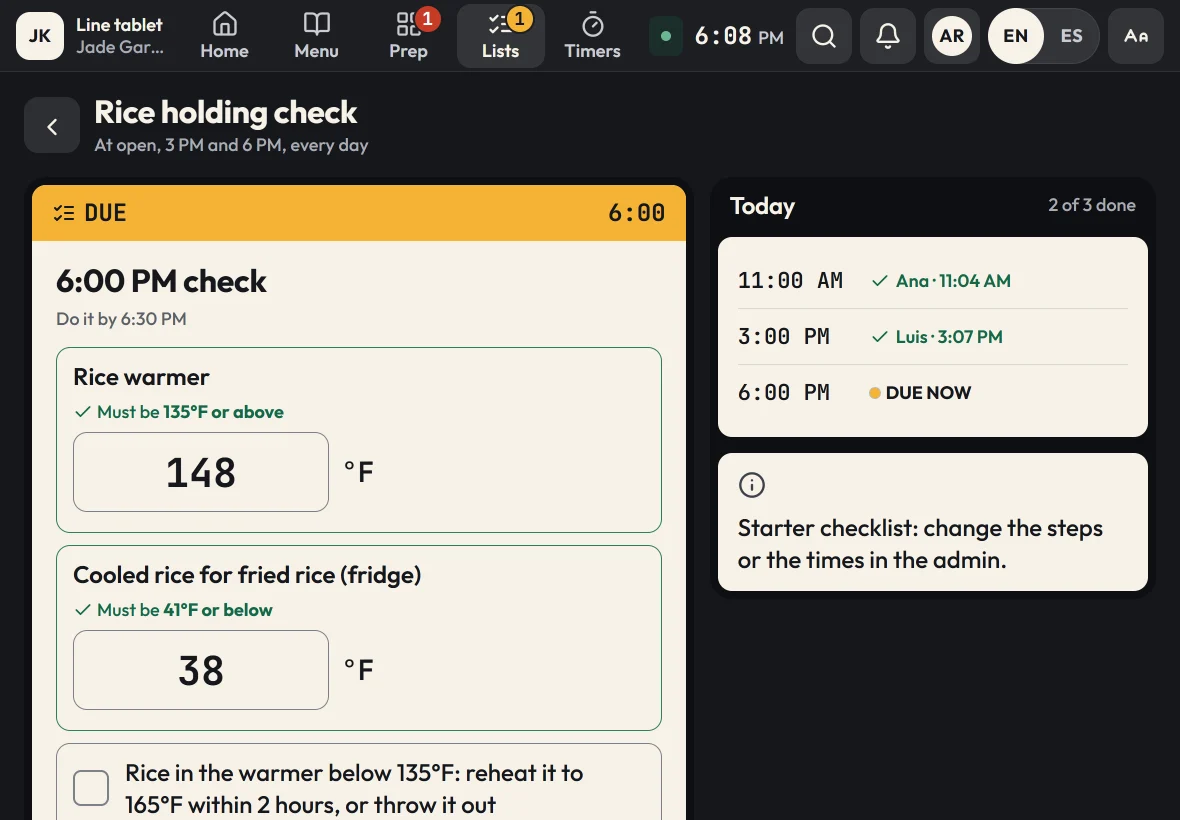
Start a two-stage cooling timer when a batch of rice comes off the heat: the tablet asks for the temperature at 2 hours and again at 6. For sushi rice, add a pH reading to a checklist step with its target, like pH 4.6 or below. If a reading is out of range, the cook writes what they did before the check can be finished, and the reading, the action and the cook's name land in the log.
- Readings in °F, °C or pH
- An out-of-range reading can alert your managers at once
- The log downloads as CSV for your HACCP plan
Station prep
The wok, the fryer and the sushi bar, each with its own list.
The prep board groups items by station, and each tablet can show only its own: the sushi bar sees fish, rice and nori, the wok sees sauces and cut vegetables. Cooks mark items stocked, low or out, claim what they're prepping, and pars can change by weekday, so Friday's dumpling count isn't Tuesday's.
More on prep lists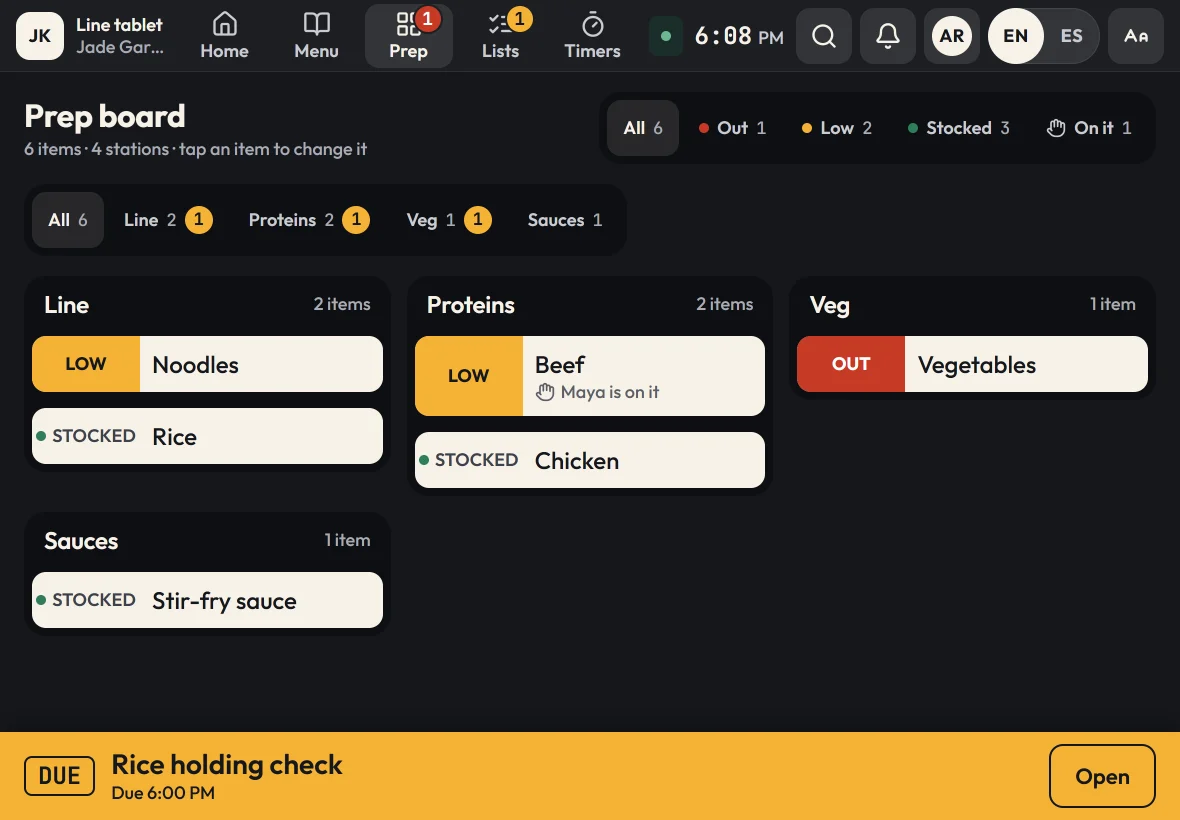
Allergen chart
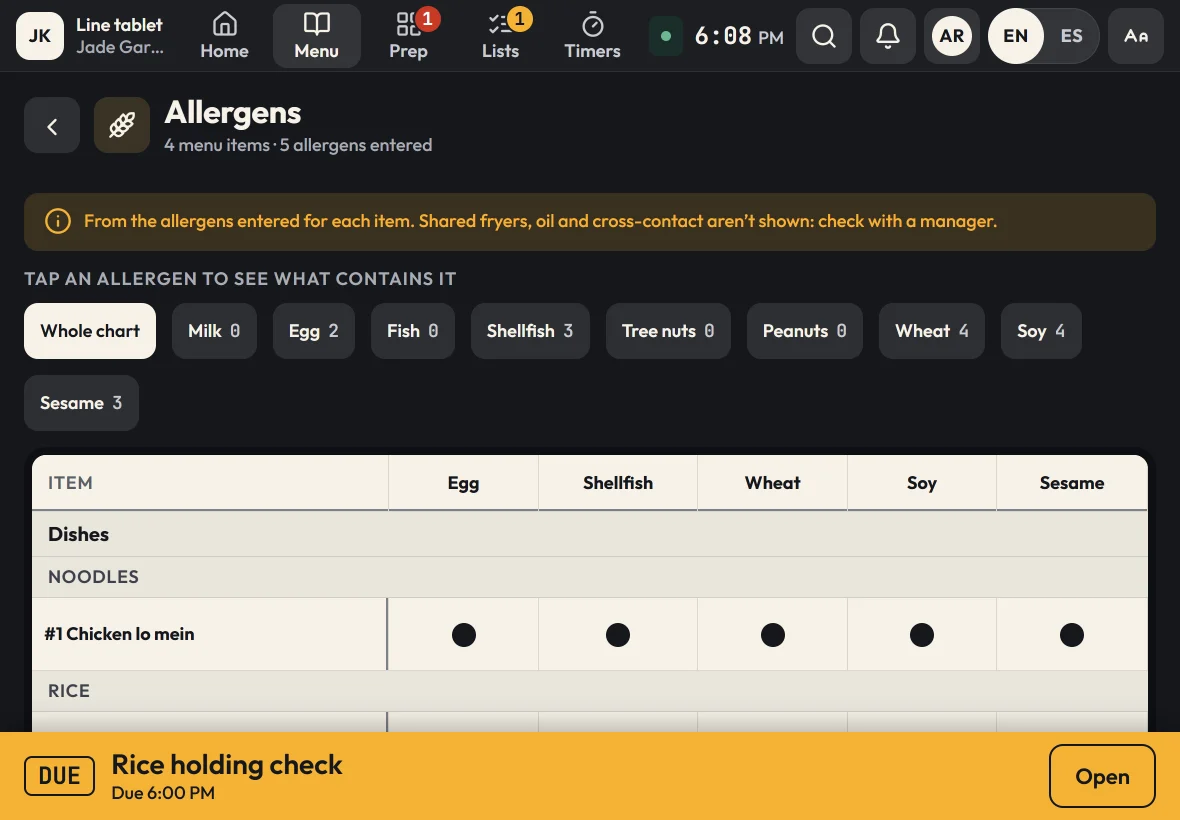
Tap Soy, Sesame, Shellfish or Peanuts on the tablet to see every dish that lists it, and every dish that doesn't.
Printed for servers
Print the whole chart on one sheet with the date, so the front of house has the same answer as the line.
Works offline
Guides, recipes and timers keep working when the Wi-Fi drops behind the hood, and sync when it's back.
Rice and seafood checks
The checks an Asian kitchen logs
What to measure, the target to set in Zatila, and what the cook records when a reading misses.
| What to check | Target | If it's out of range |
|---|---|---|
| Cooked rice, cooling | 135°F to 70°F in 2 hours, then to 41°F within 4 more | Reheat to 165°F and cool again, or throw it out |
| Cooked rice, hot holding | 135°F or above | Reheat to 165°F, or throw it out if you can't say how long it was low |
| Sushi rice, acidified | pH 4.6 or below, per your plan | Hold the batch, throw it out, and check the vinegar mix |
| Sushi fish and shellfish | 41°F or below | Move it to ice or the walk-in and tell a manager |
| Stocks and braises, cooling | 135°F to 70°F in 2 hours, then to 41°F within 4 more | Reheat to 165°F and cool again, or throw it out |
How it works
Get your Asian kitchen on Zatila
- 01
Choose Asian at sign-up
Start with example noodle and rice dishes, prep items, a sauce recipe and checklists you can change.
- 02
Upload your recipes
Your menu, sauce sheets and prep lists, set up as guides and recipes for you to review.
- 03
Pair a tablet per station
The wok line, the sushi bar and prep, each showing its own station. Tablets are unlimited.
- 04
Cook and check
Guides at the wok, timers on the rice, readings in the log, and the allergen chart for servers.
How do I log sushi rice pH?
Add a pH reading to a checklist step, with the target from your HACCP plan, like 4.6 or below. The cook enters the reading for each batch; if it's out of range, they write what they did, and the reading, the action and their name are saved in the log.
How should cooked rice be cooled?
The FDA Food Code cools cooked food from 135°F to 70°F within 2 hours, then to 41°F within 4 more. Spread rice in shallow pans to get there. Zatila's two-stage cooling timer asks for the temperature at the end of each stage and logs it.
Can servers check which dishes have soy, sesame, shellfish or peanuts?
Yes. The allergen chart lists every dish against the allergens you enter, on the tablet and as a printed sheet. It shows only what's entered for each dish, not shared fryers or cross-contact, so servers still check with a manager.
Can I scale a sauce recipe for a busy weekend?
Yes. Every recipe has a batch scaler from half a batch to 4 batches, or type another amount up to 20 batches, and every ingredient amount changes with it.
Does Zatila work for a sushi bar and a wok kitchen under one roof?
Yes. Give each its own station on the prep board and its own checklists. Each tablet can filter the board to its station, and both share one menu and one allergen chart.
Pricing
Asian kitchen software, priced per location.
Every plan has every kitchen tool and unlimited tablets, and coming soon and closed locations are free.
Starter
For one kitchen getting organized.
$39per location
/ month$35 from the 5th location, $29 from the 10th
Start free$390per location
/ year$32.50 a month, billed yearly. $350 from the 5th location, $290 from the 10th
- Menu guides, recipes and the prep guide
- Prep board, checklists and use-by labels
- Food-safety timers with temperature logs
- Unlimited tablets
- Zatila sets up 50 items a month for you
Recommended
Pro
For busy kitchens and growing teams.
$69per location
/ month$59 from the 5th location, $49 from the 10th
Start free$690per location
/ year$57.50 a month, billed yearly. $590 from the 5th location, $490 from the 10th
- Everything in Starter
- Zatila sets up your whole menu, with no monthly limit
Chain
For groups with 10 or more locations.
Talk to usCustom
- Everything in Pro
- Setup help for every location
- Custom terms and invoicing
Coming soon and closed locations are free.
30-day free trial, no card.
Prices in US dollars. Tax is added where it applies.
Keep reading